Description
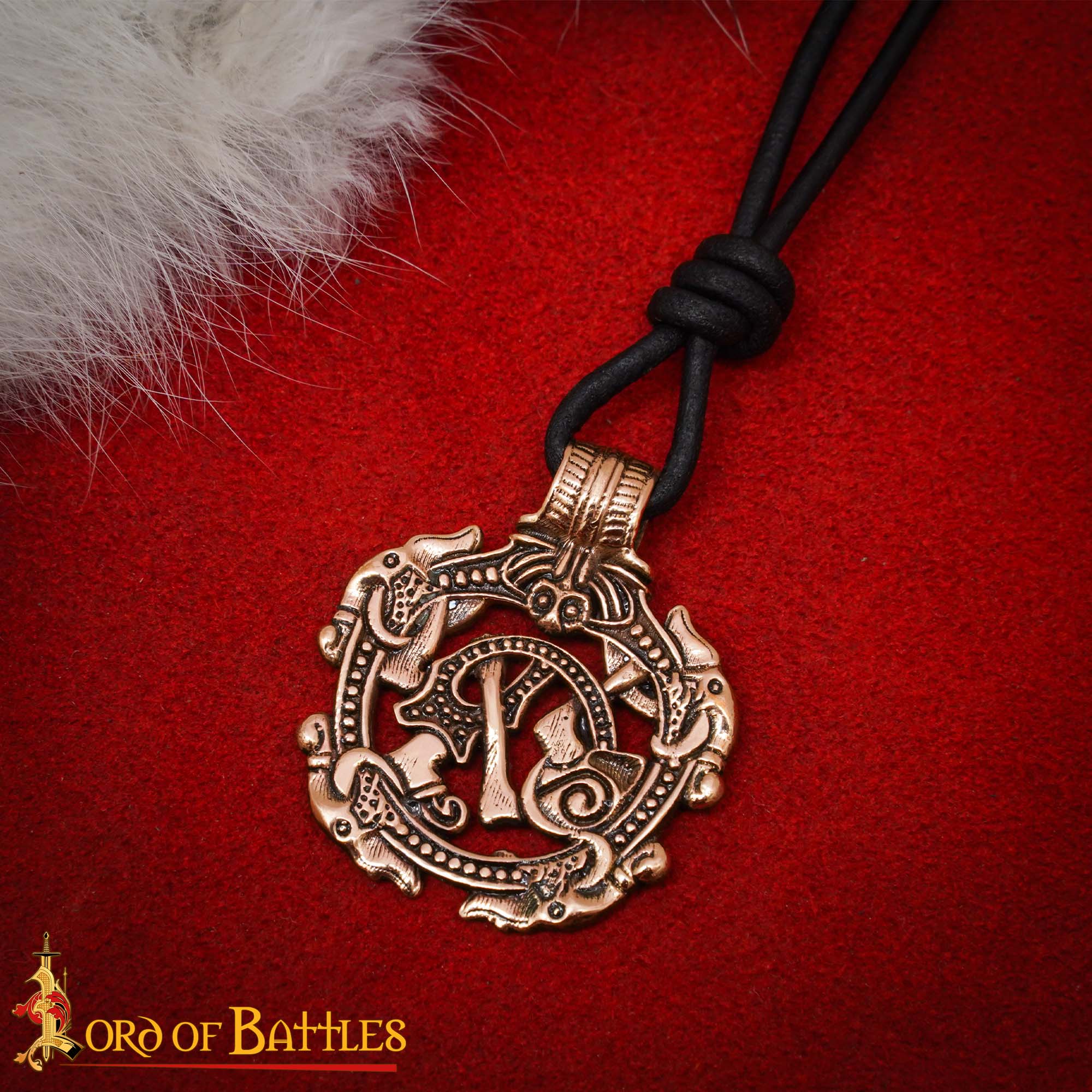
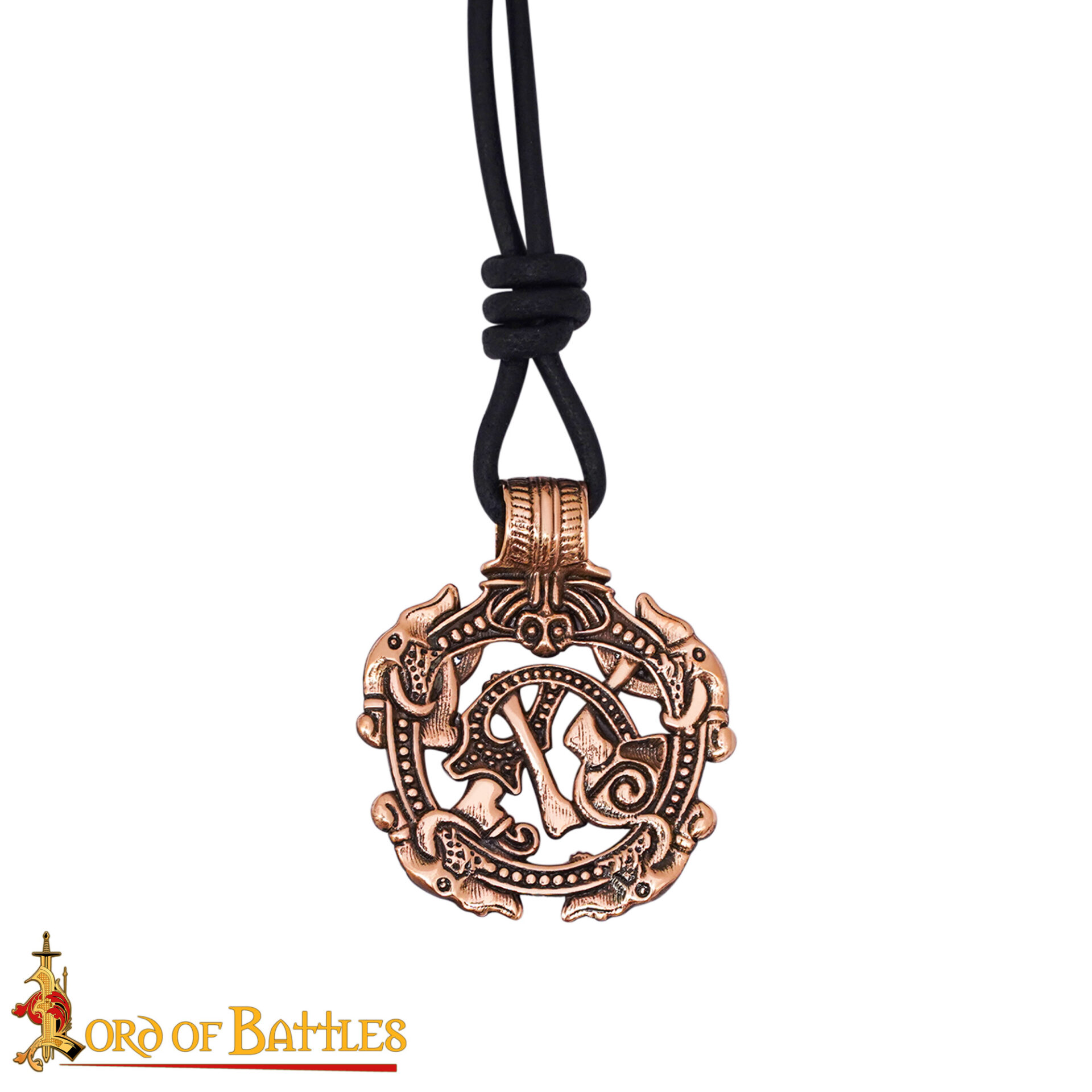
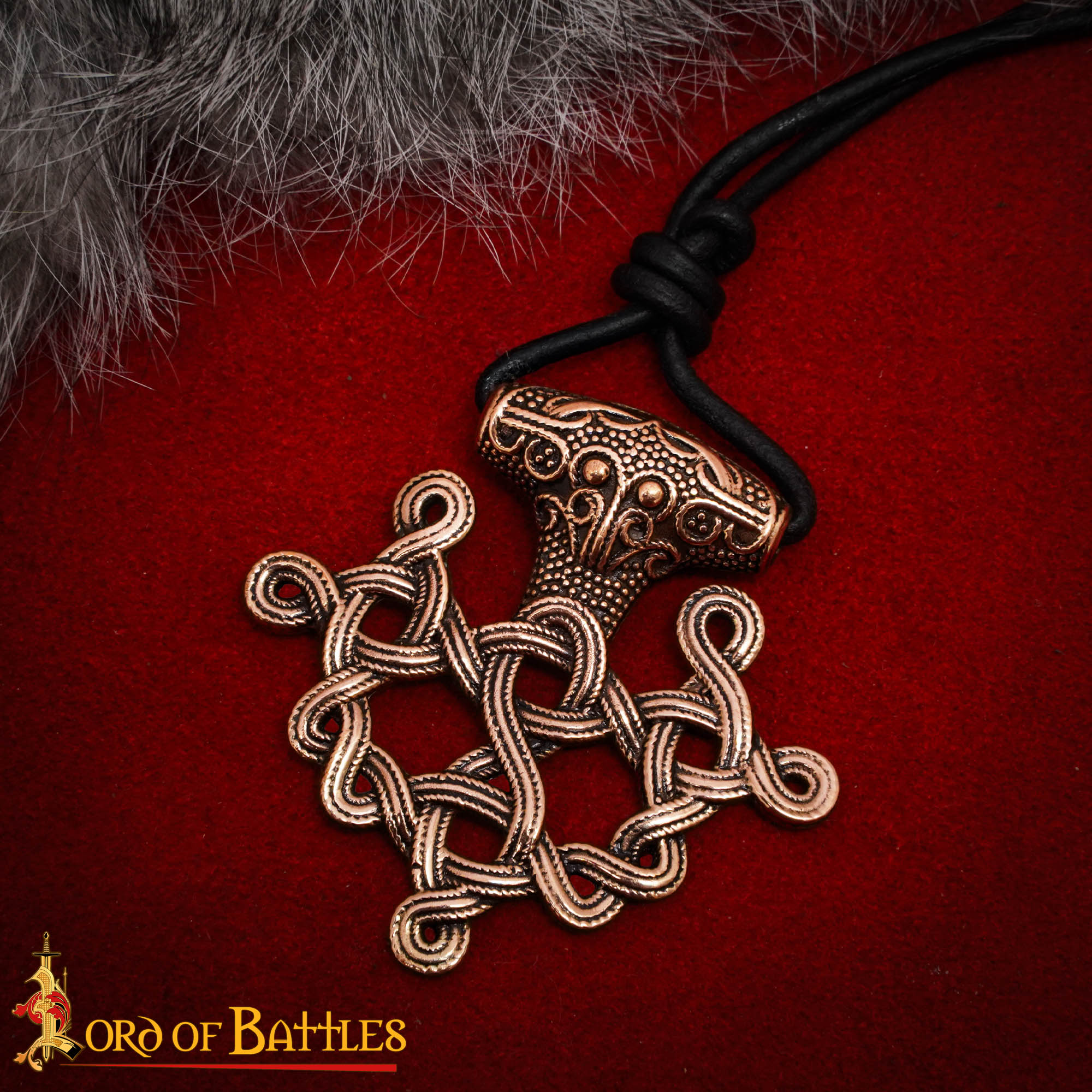
This Viking bronze pendant is inspired by serpent-themed ornaments uncovered in Viking Age burial sites across Scandinavia. Such motifs often depicted Jörmungandr, the great sea serpent encircling the world in Norse mythology, a creature bound to the fate of the gods at Ragnarök.
The circular form of this pendant is not merely decorative – it mirrors the endless cycle of life, death, and rebirth, a core belief among Norse seafarers and warriors. Worn as an amulet, a piece like this would have been seen as both a protective charm against misfortune and a declaration of cultural identity.
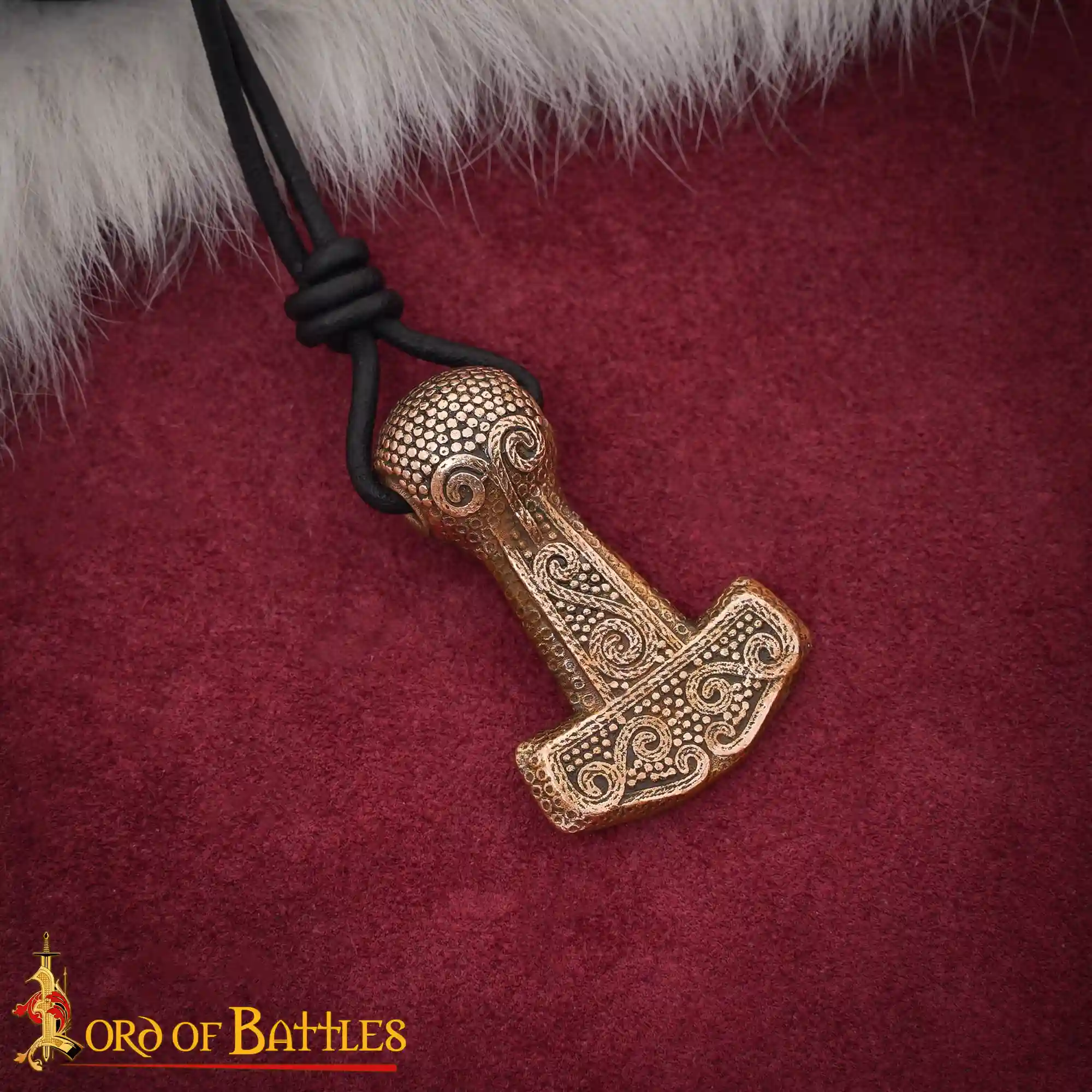
Each bronze pendant is individually made using the ancient lost-wax casting process, a method dating back thousands of years. Artisans carve the original design in wax, encase it in clay or plaster, melt away the wax, and replace it with molten bronze. This technique ensures sharp detailing, strength, and uniqueness, as no two casts are ever entirely identical.
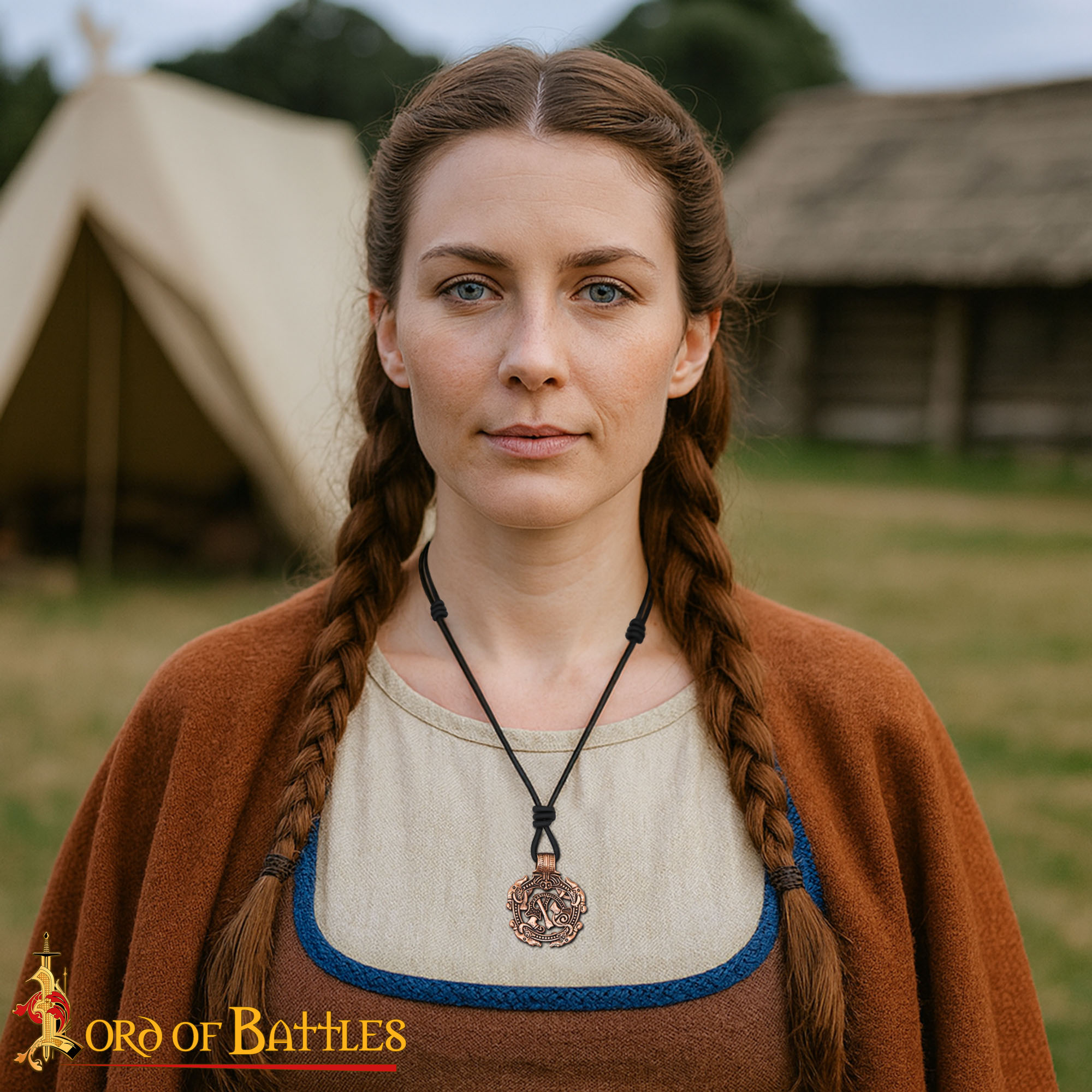
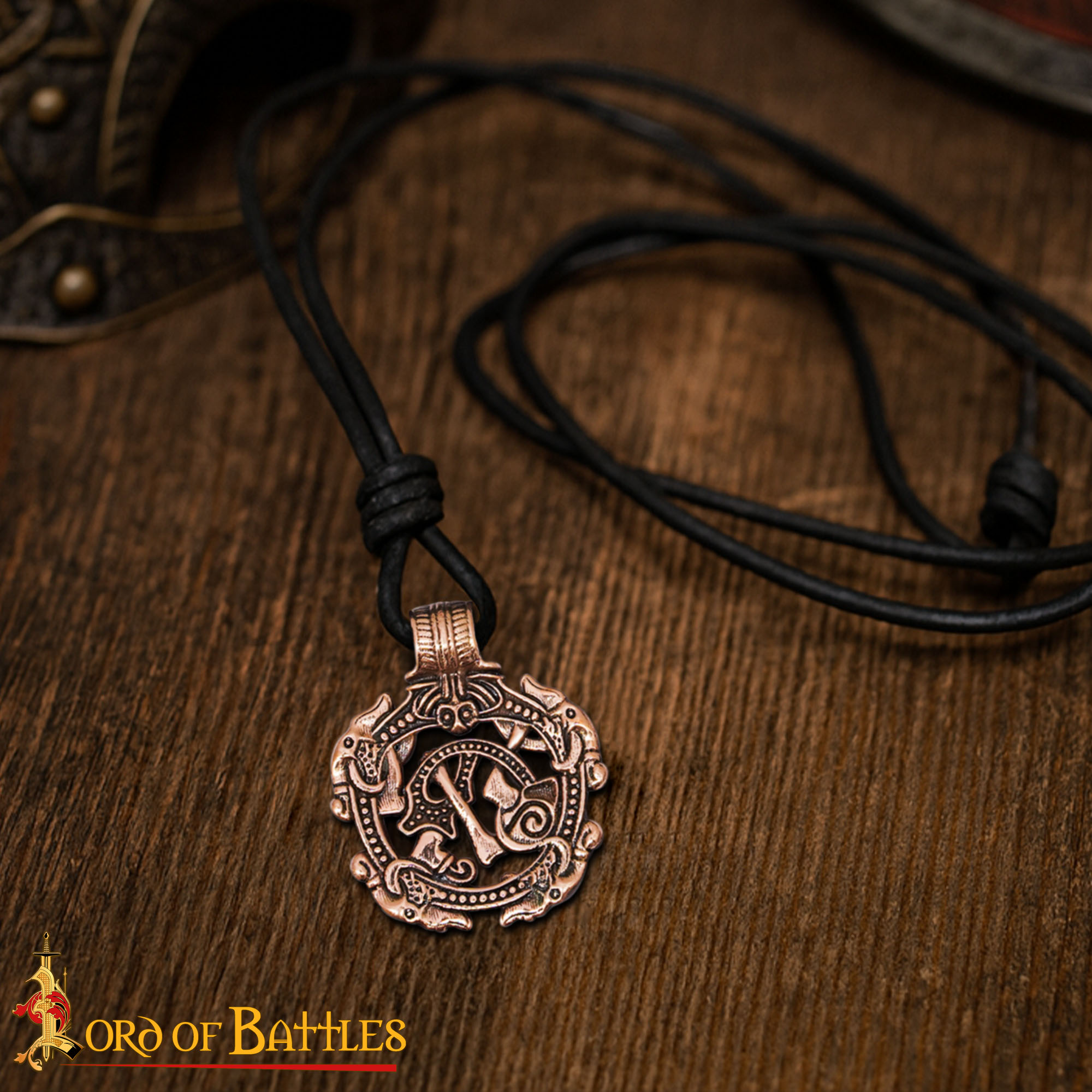
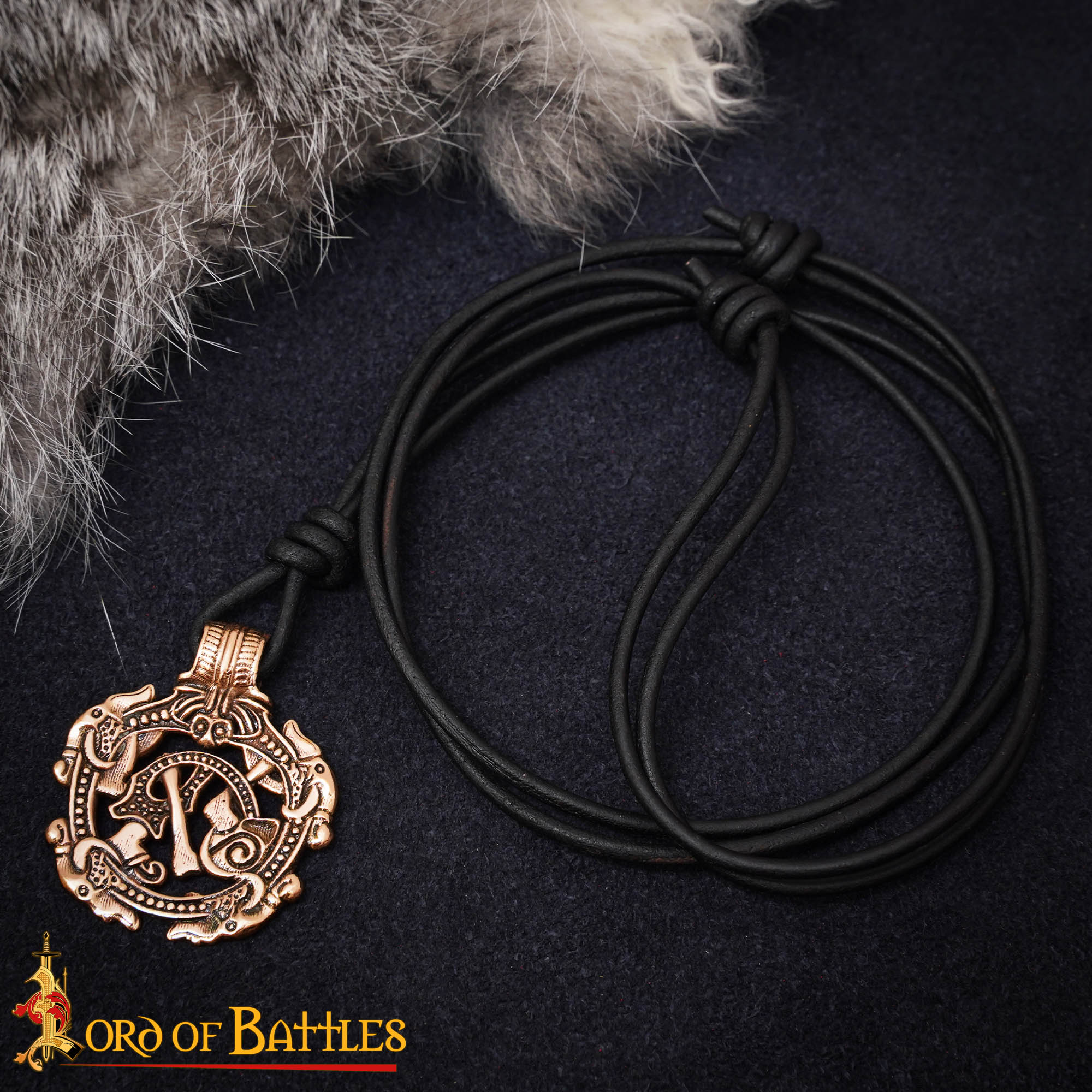
The antique bronze finish enhances the openwork knot and serpent detailing, while the 2 mm thick leather cord provides a comfortable yet rugged fit. The cord is fully adjustable from 23–47 cm (9–18 in), allowing it to be worn close to the neck as a choker or lower as a pendant.
This bronze pendant is ideal for Norse history enthusiasts, Viking kit builders, or anyone drawn to the mystic symbolism of Old Norse mythology.
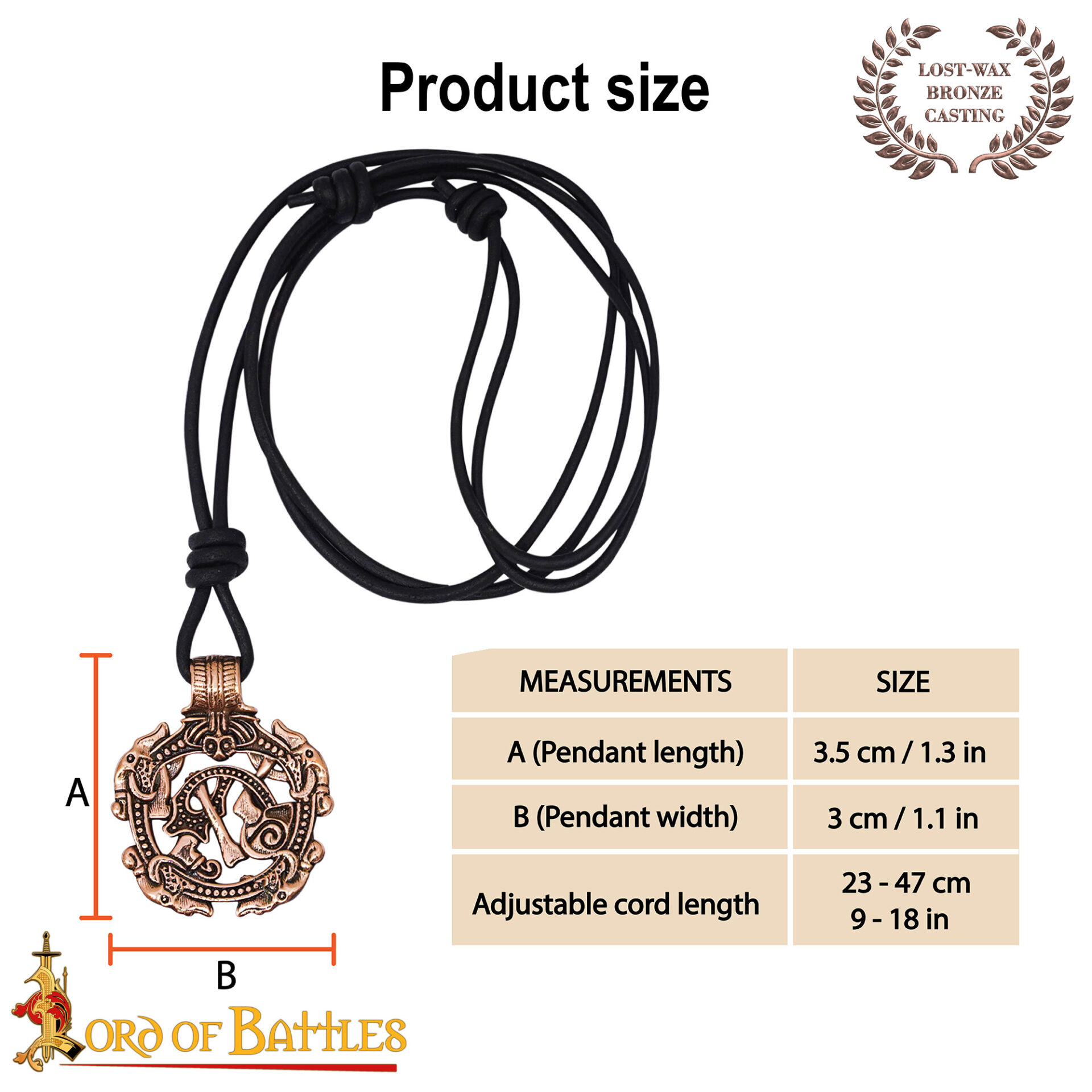
Measurements: Approximate
-
Pendant Length: 3.5 cm / 1.3 in
-
Pendant Width: 3 cm / 1.1 in
-
Cord Thickness: 2 mm
-
Cord Length (Adjustable): 23–47 cm / 9–18 in
Care Instructions
-
Wipe with a soft, dry cloth after wearing
-
Store in a dry place away from prolonged moisture
-
Avoid contact with acids or harsh chemicals
-
If desired, polish gently with a non-abrasive cloth to maintain the bronze’s warm sheen
Note on Bronze & Lost-Wax Casting
Because this bronze pendant is hand-cast using traditional lost-wax methods, slight variations in color and detailing are a natural part of the crafting process. These marks of individuality reflect the authentic nature of historical metalwork and make each piece truly one of a kind.