A medieval helmet is one of the most iconic pieces of armor in history. Whether you are a reenactor, collector, cosplayer, living history enthusiast, or simply a fan of medieval culture, choosing the right helmet can significantly enhance both authenticity and protection. With so many styles available, understanding the differences between medieval helmets is essential before making a purchase.
Why Medieval Helmets Were Important
Throughout the Middle Ages, helmets served as the primary defense against swords, axes, arrows, and blunt-force impacts. As warfare evolved, helmet designs became more sophisticated to provide better protection while maintaining visibility and comfort.
Today, medieval helmets are popular for historical reenactment, LARP events, stage productions, collections, and home décor. Selecting the right helmet depends on your intended use, historical period, and personal preferences.
Determine Your Purpose
Before purchasing a medieval helmet, consider how you plan to use it.
Historical Reenactment
Authenticity is critical for reenactors. Choose a helmet appropriate for the historical period and region you portray.
LARP and Cosplay
Comfort and appearance are often more important than battle-ready construction. Lightweight helmets can provide the desired look while remaining comfortable for extended wear.
Collecting and Display
Collectors often prioritize craftsmanship, historical accuracy, and decorative details.
Stage Combat
Durability and visibility should be key considerations if the helmet will be used during performances or demonstrations.
Popular Types of Medieval Helmets
Norman Helmet
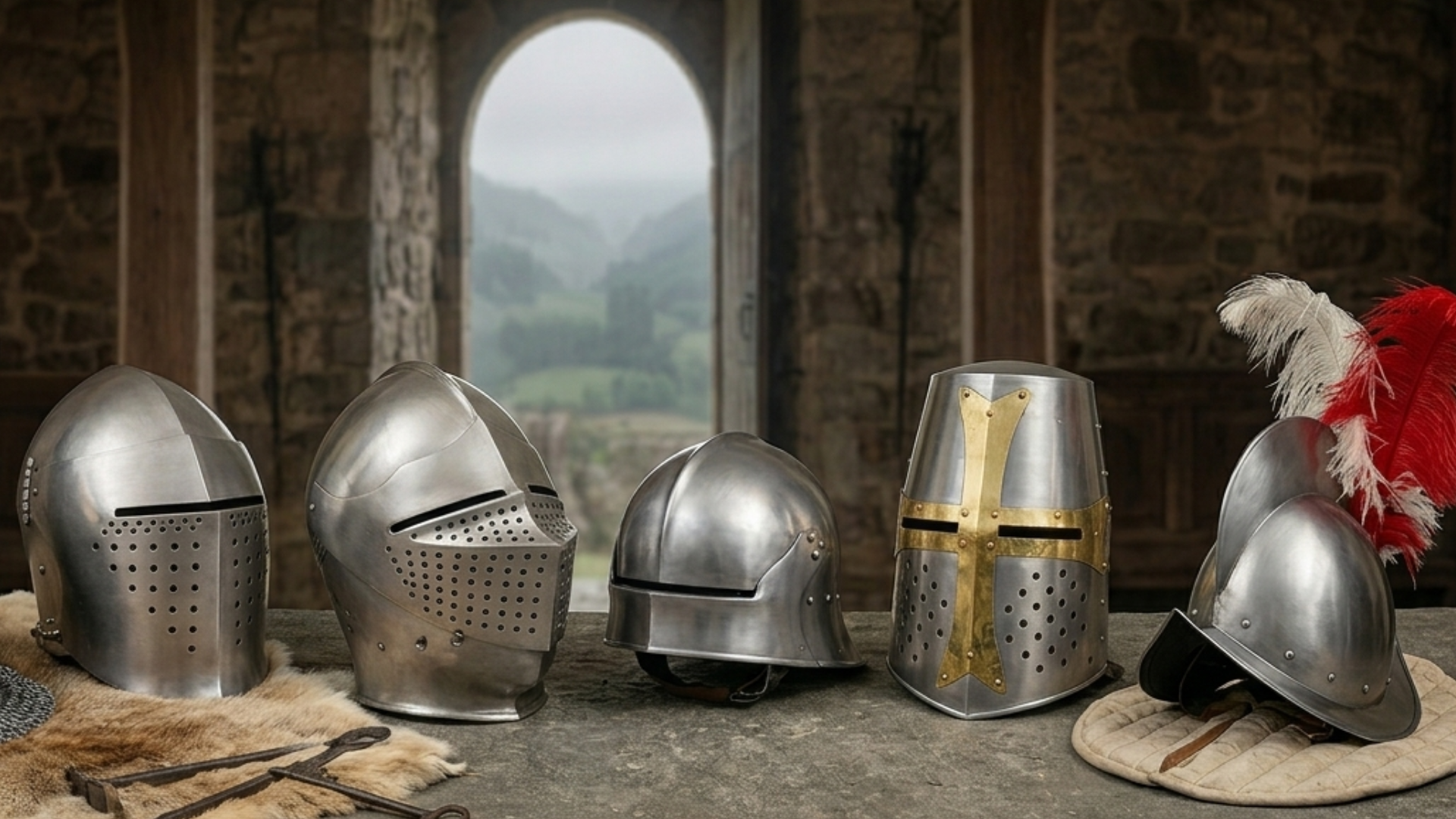
The Norman helmet is one of the most recognizable medieval helmet styles. Characterized by its conical shape and nasal guard, it was widely used during the 11th and 12th centuries, including at the Battle of Hastings.
Best for:
- Norman reenactments
- Early medieval displays
- Viking Age transition periods
Great Helm
The Great Helm emerged during the Crusades and became a symbol of medieval knighthood. It provides extensive facial protection but offers limited visibility and ventilation.
Best for:
- Knight portrayals
- Crusader impressions
- High medieval reenactment
Popular during the 14th century, the bascinet features improved comfort, mobility, and facial protection through optional visors.
Best for:
- Medieval combat displays
- Historical reenactment
- Collectors seeking authenticity
Widely used during the 15th century, the sallet offered excellent protection while allowing greater movement and visibility.
Best for:
- Late medieval reenactment
- Historical displays
- Renaissance enthusiasts
Historically accurate Viking helmets were typically simple iron caps, often featuring spectacle guards rather than horns. Contrary to popular belief, horned Viking helmets were not used in battle.
Best for:
- Viking reenactment
- Living history events
- Scandinavian collections
Material Matters
The material of a medieval helmet significantly affects durability, appearance, and weight.
Mild Steel
Mild steel is commonly used in modern reproductions due to its affordability and durability.
Advantages:
- Strong construction
- Cost-effective
- Suitable for most collectors and reenactors
Stainless steel resists rust and requires less maintenance.
Advantages:
- Corrosion resistant
- Attractive finish
- Ideal for display purposes
Check Helmet Thickness
Steel thickness can impact both protection and weight.
General Guidelines:
- 18 Gauge Steel: Suitable for decorative and light-duty use.
- 16 Gauge Steel: Popular for reenactment and display.
- 14 Gauge Steel: Preferred for heavier combat applications.
Always verify event requirements before purchasing a helmet for reenactment activities.
Ensure Proper Fit
A poorly fitted helmet can be uncomfortable and reduce effectiveness.
Measure the circumference of your head using a flexible measuring tape positioned above the eyebrows and ears. Compare your measurement with the manufacturer’s sizing chart before ordering.
Look for:
- Adjustable leather liners
- Chin straps
- Internal padding
- Secure fit without excessive movement
Consider Visibility and Ventilation
Different helmet designs offer varying levels of vision and airflow.
For example:
- Great Helms provide maximum protection but limited visibility.
- Bascinets offer a balance between protection and comfort.
- Sallets often provide excellent visibility and mobility.
Choose a design that matches your intended use.
Maintenance Tips
To keep your medieval helmet in excellent condition:
- Wipe away moisture after use.
- Store in a dry location.
- Apply light oil to carbon steel surfaces.
- Inspect straps and liners regularly.
- Avoid prolonged exposure to humidity.
Proper maintenance helps preserve appearance and functionality for years.
Final Thoughts
Choosing a medieval helmet involves balancing authenticity, protection, comfort, and aesthetics. Whether you prefer the iconic Great Helm, the versatile Bascinet, or a historically inspired Viking helmet, selecting the right design will enhance your medieval experience.
By considering historical accuracy, materials, fit, and intended use, you can confidently invest in a helmet that meets your needs and stands the test of time.
Explore Lord of Battles’ collection of handcrafted medieval helmets to find the perfect addition to your armor collection, reenactment kit, or historical display.