When you think of Medieval Chainmail, the first image that probably comes to mind is a knight shining under the sun, fully armored and ready for battle. But behind that iconic look lies a crucial decision—riveted vs butted chainmail. While both may look similar at a glance, their construction, strength, and purpose are completely different. Whether you’re into LARP, reenactment, theatre, or collecting historical gear, choosing the right type matters more than you might think. This guide breaks down everything—strength, durability, cost, weight, and usage—so you can make a smart decision without wasting money.
Chainmail, often referred to as mail armor, dates back over 2,000 years and was widely used across Europe and Asia. It was originally developed by the Celts and later adopted by Roman soldiers and medieval knights. Its popularity came from a unique balance—it offered protection while still allowing flexibility in combat. According to historical findings, chainmail was effective against slashing attacks and significantly improved survival rates in battle .
Over time, different construction methods evolved, but one thing remained constant—the importance of how each ring was connected. That’s where the distinction between riveted and butted comes into play.
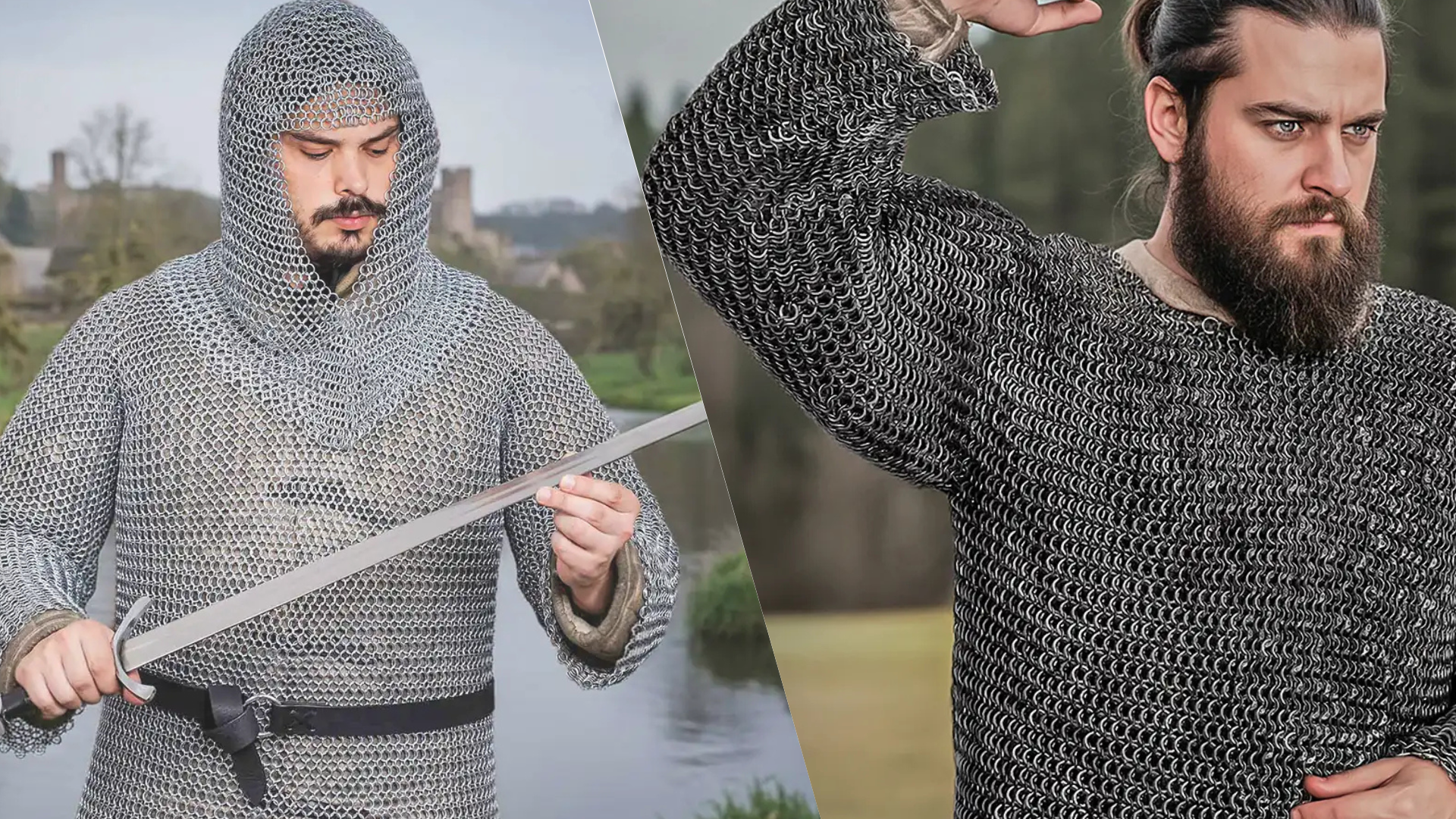
At its core, chainmail is simple yet genius. It’s made from thousands of interlinked metal rings, usually in a “4-in-1” pattern where each ring connects to four others. This creates a flexible mesh that moves with the body while distributing force across multiple points.
But here’s the catch: the strength of chainmail doesn’t just depend on the material—it heavily depends on how those rings are closed. This is the key difference between Butted Steel Chainmail and Riveted Steel Chainmail.
Steel Chainmail is the most traditional and widely used option. It offers excellent durability and a realistic medieval appearance. High-carbon steel, in particular, is known for its strength and resistance to deformation.
On the modern side, Titanium Chainmail has gained popularity. It’s lighter than steel and resistant to rust, making it ideal for long wear sessions like LARP or stage performances. However, it’s significantly more expensive.
Butted Steel Chainmail is the simplest form of chainmail. Each ring is formed into a circle, and the ends are simply pressed together—no welding, no rivets, just contact.
The process is straightforward: metal wire is coiled, cut into rings, and then closed by pushing the ends together. This simplicity makes it fast to produce and widely available.
Let’s be real—butted chainmail is popular for a reason. It’s affordable and beginner-friendly. But it comes with trade-offs.
Pros:
Cons:
In fact, studies show that non-riveted mail can be penetrated much more easily by sharp weapons compared to riveted versions . That tells you everything about its limitations.
Riveted Steel Chainmail is the gold standard when it comes to durability. Each ring is secured with a tiny rivet, locking it permanently in place.
The ends of each ring are flattened, overlapped, and then fastened with a small metal rivet. This process is labor-intensive, which explains the higher price.
If butted chainmail is entry-level, riveted is professional-grade.
Pros:
Cons:
Historically, almost all functional armor used riveted construction because it could withstand real battlefield conditions.
| Feature | Butted Chainmail | Riveted Chainmail |
|---|---|---|
| Strength | Low | Very High |
| Durability | Moderate | Excellent |
| Cost | Affordable | Expensive |
| Weight | Lightweight | Heavier |
| Maintenance | Easy | Complex |
| Authenticity | Low | High |
| Best Use | LARP, costume | Reenactment, combat |
The main difference lies in how the rings are secured. Riveted chainmail uses small metal rivets to lock each ring, making it much stronger and more durable. Butted chainmail, on the other hand, simply presses the ends of the rings together, which makes it more affordable but less reliable under stress.
Yes, butted chainmail is an excellent choice for beginners because it is budget-friendly, lightweight, and easy to repair. It allows new users to experience Medieval Chainmail without investing heavily in more expensive armor.
Riveted chainmail requires more labor and precision during manufacturing. Each ring must be flattened, punched, and secured with a rivet, which increases production time and cost compared to butted chainmail.
Traditional Steel Chainmail is effective against slashing attacks like swords but less effective against piercing weapons such as arrows or spears. This is why it was often worn with additional padding or armor layers in medieval times.
A full set of Medieval Chainmail can weigh between 10 to 15 kilograms depending on the material and construction. Riveted steel versions are generally heavier, while Titanium Chainmail offers a lighter alternative.
Yes, Steel Chainmail can rust if not properly maintained. Regular oiling and dry storage are essential to prevent corrosion. Alternatively, titanium or aluminum options are more resistant to rust.
Chainmail can be comfortable if worn with proper padding underneath. Without padding, the weight and friction may cause discomfort during extended use.
Basic Chainmail Tools include pliers and cutters. For riveted chainmail, specialized rivet tools are also required. Loose Rings are used to replace damaged or missing links.
Yes, chainmail can be adjusted by adding or removing rings. This makes it highly customizable compared to rigid armor types.
Butted chainmail is the best option for cosplay because it is lightweight, affordable, and visually similar to authentic armor without the extra cost and weight.