Description
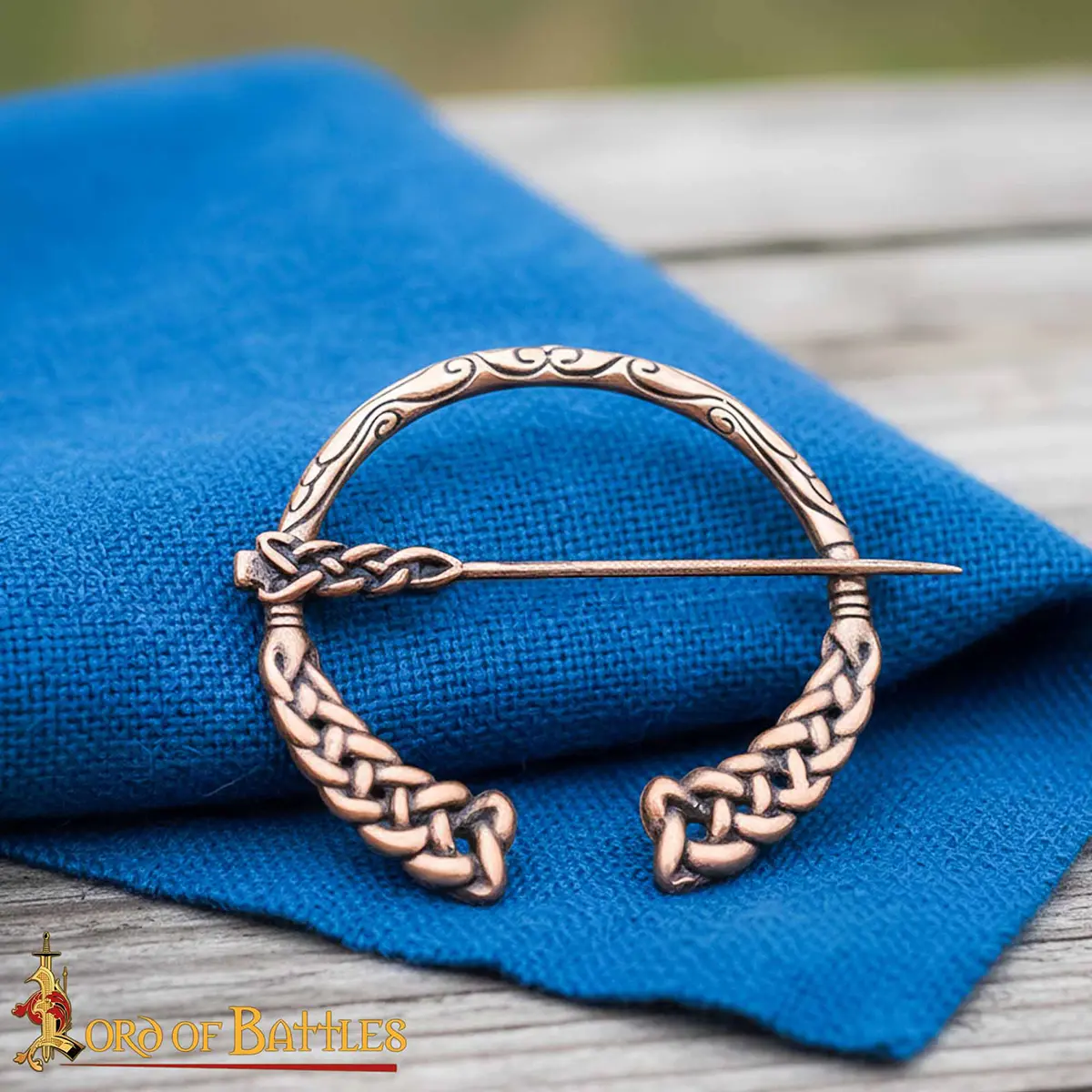
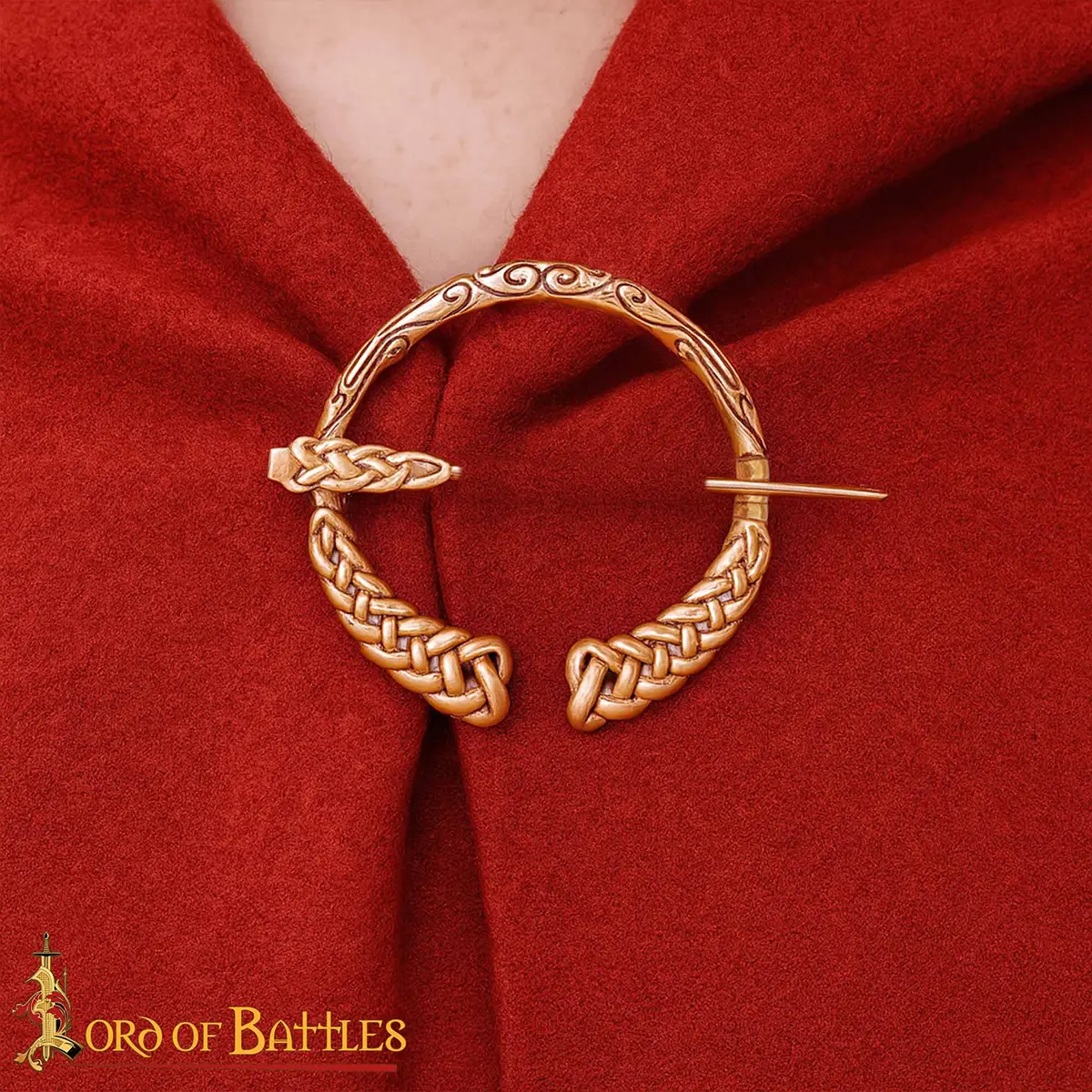
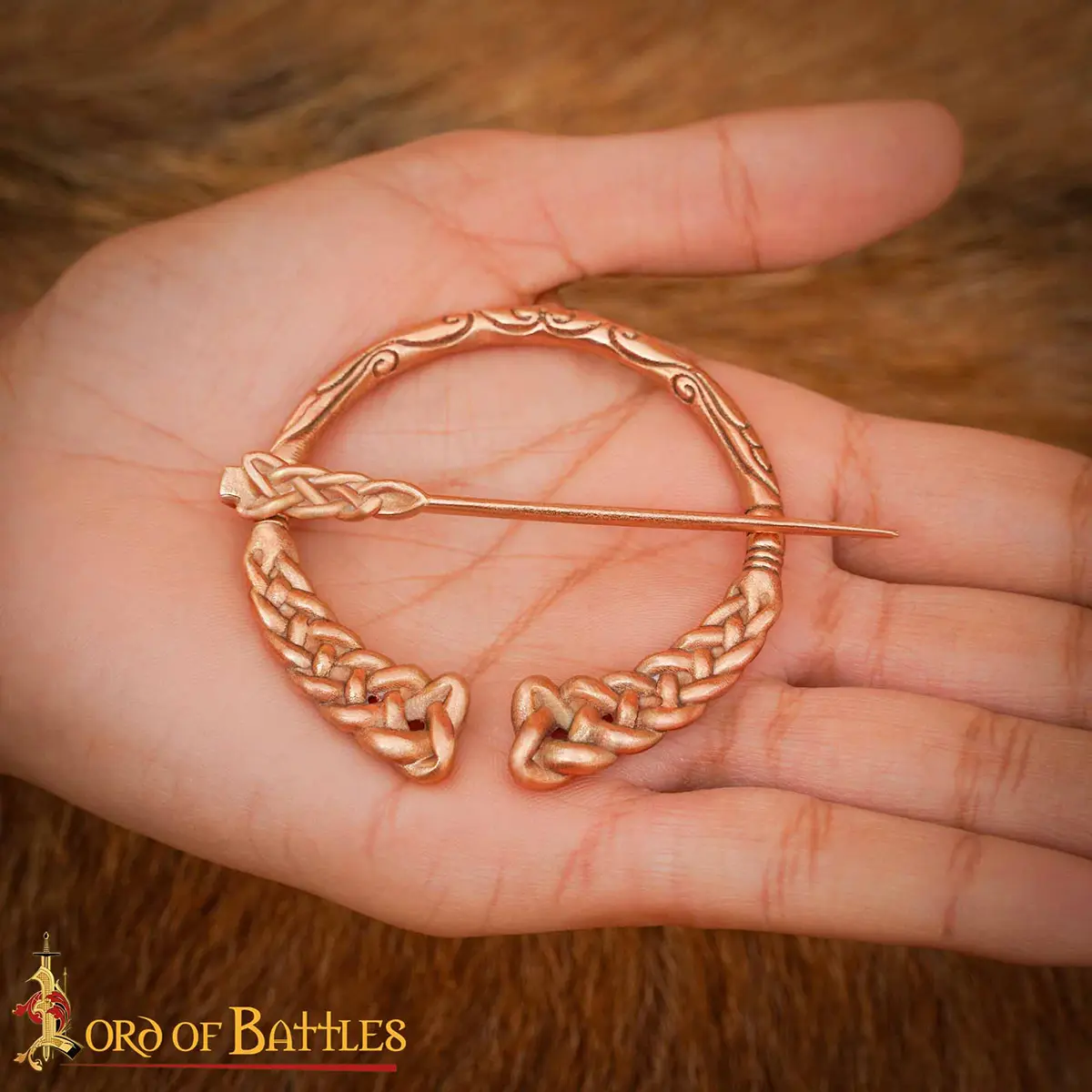
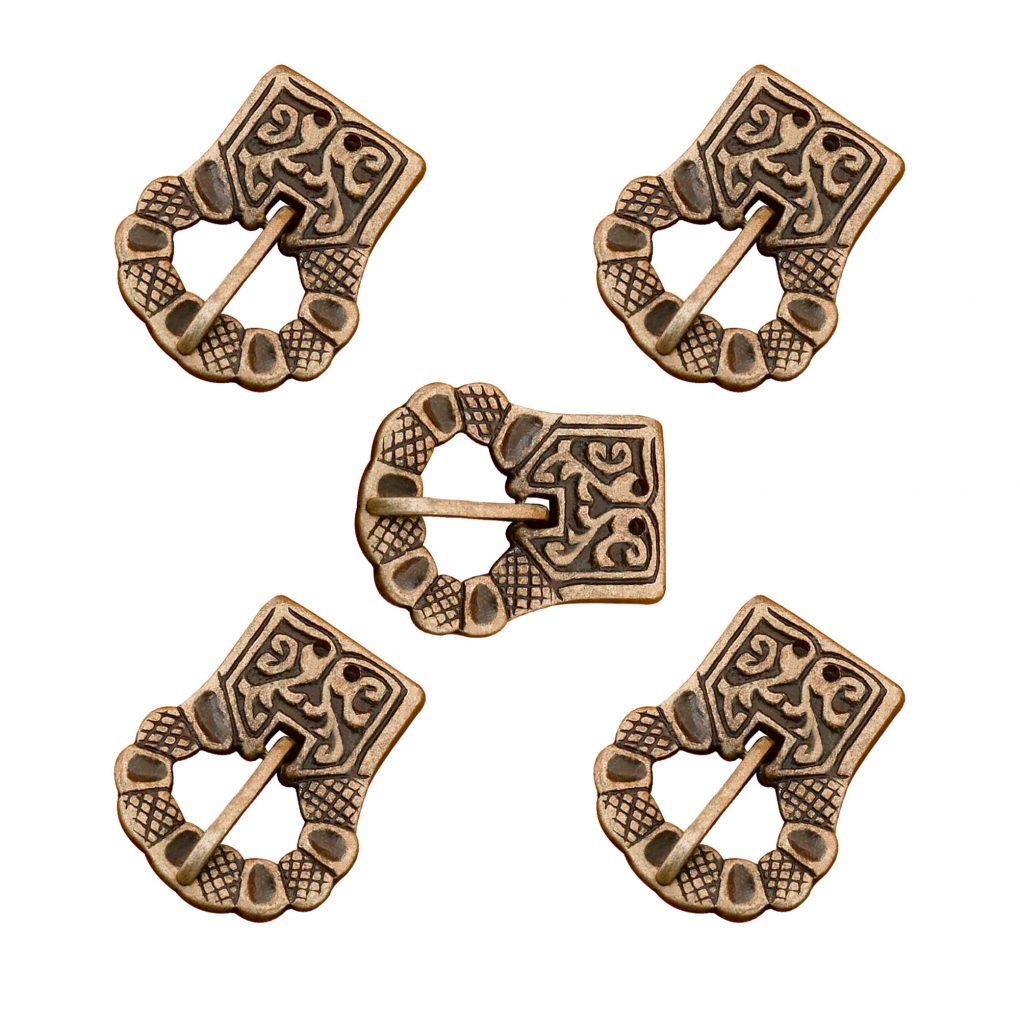
This Viking brooch is a faithful reproduction of the penannular cloak pins which were used across Scandinavia during the Viking Age (9th – 11th century). Such brooches were discovered in burial sites in Norway, Denmark, Sweden, and Viking settlements, which proved that they were used very often in Norse life.
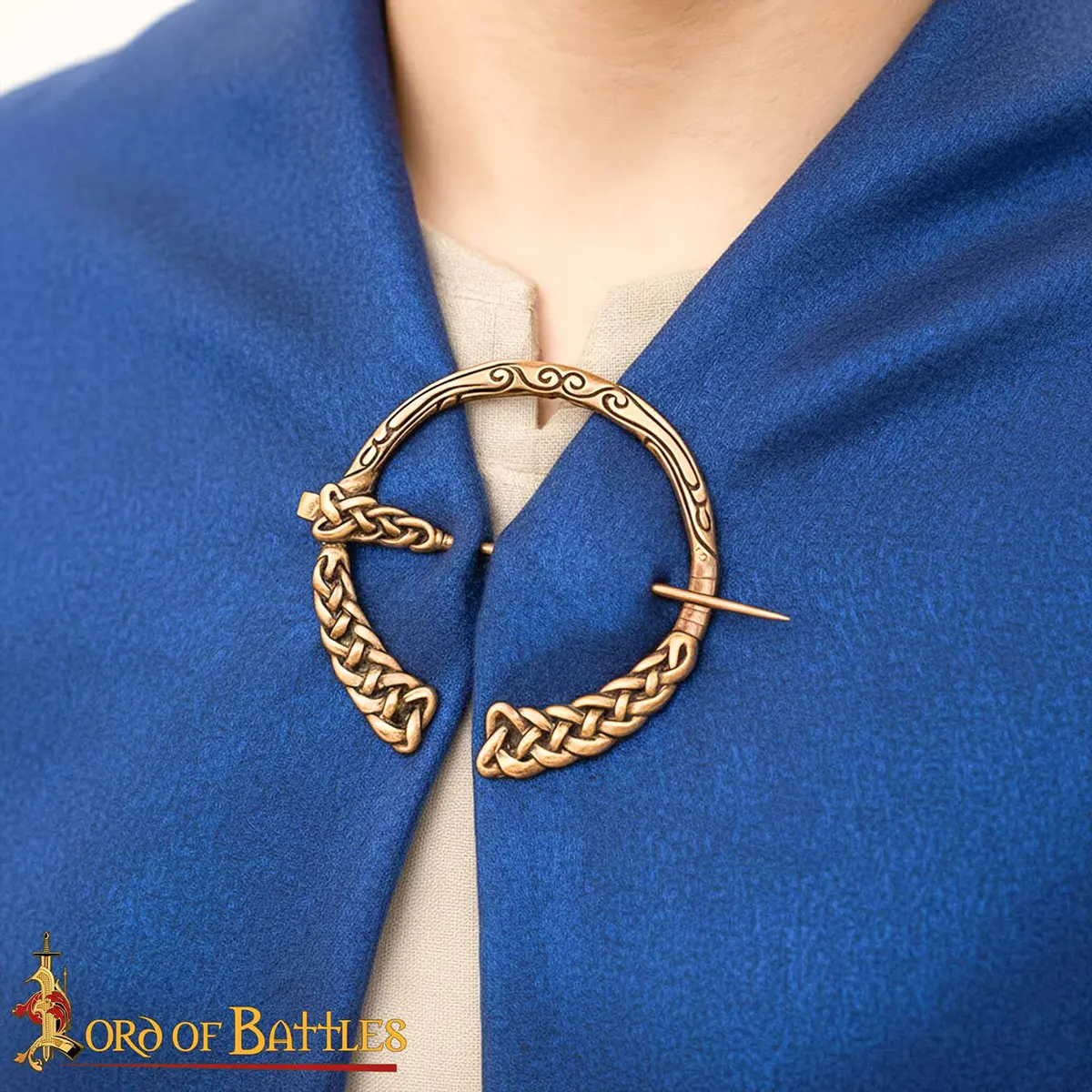
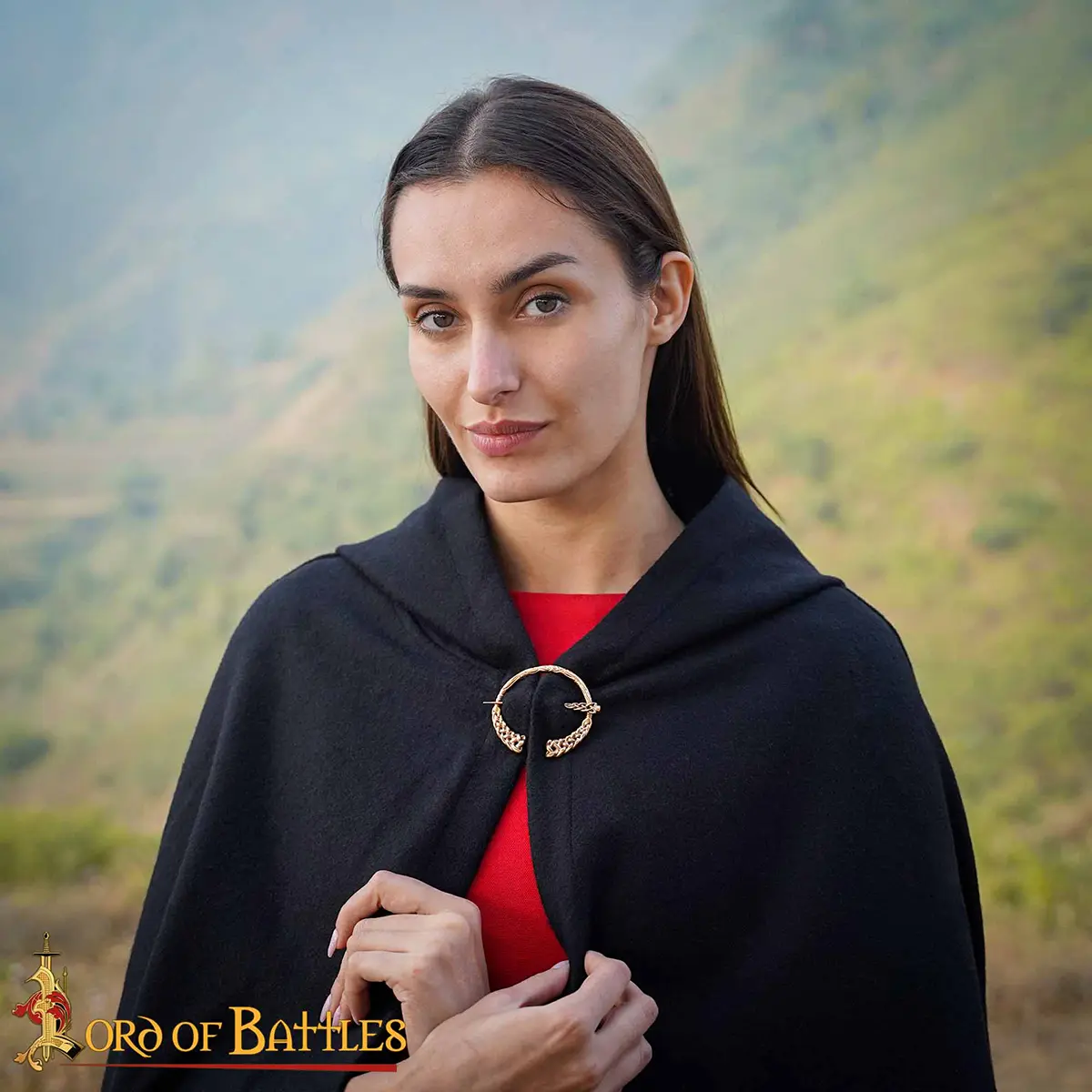
Before buttons existed, Norse people used strong metal fasteners to tie their heavy wool cloaks and tunics. The penannular shape, which has an open ring with a rotating pin, was used because it held garments properly and even helped in adjusting them as per the need. So these were suitable for both daily wear and long journeys.
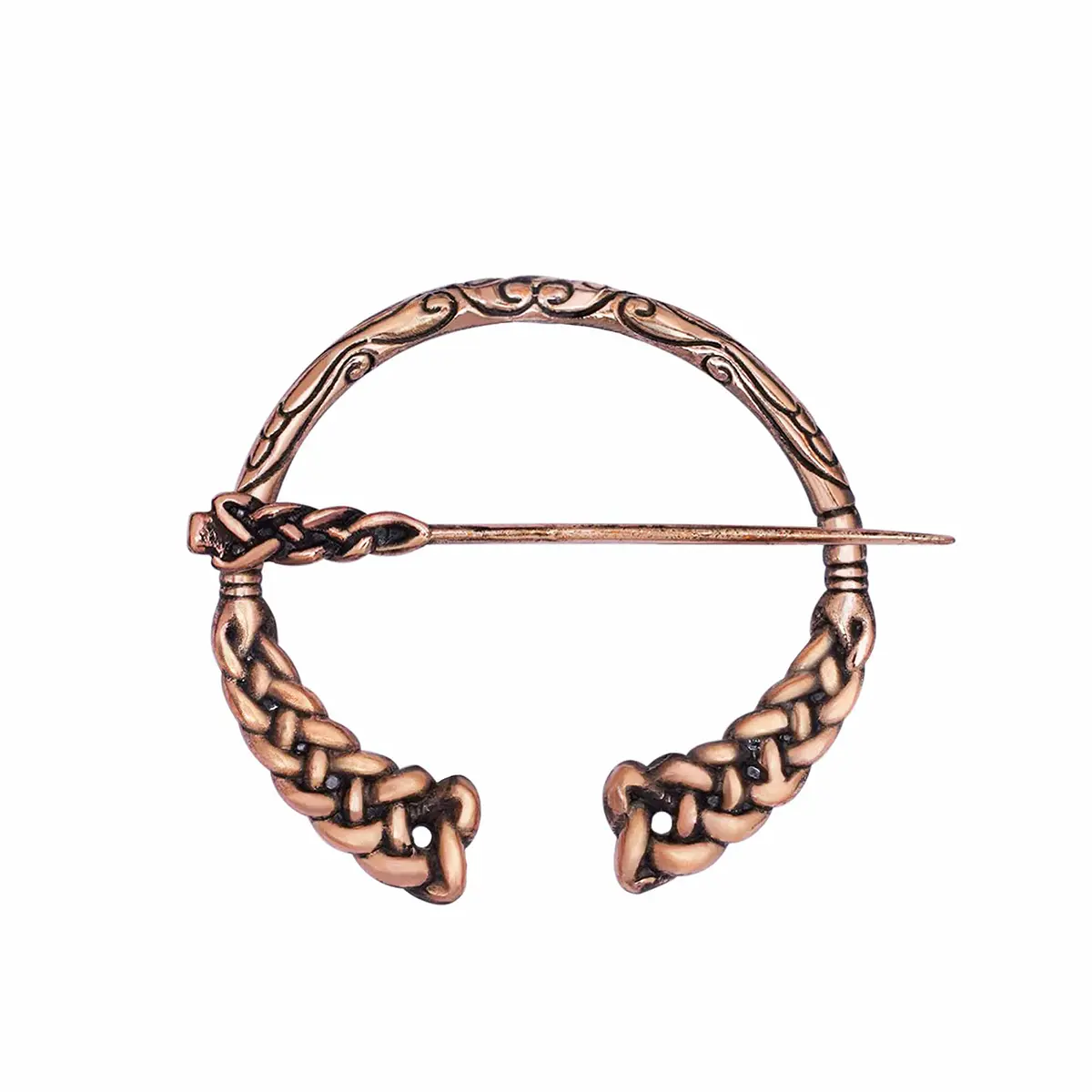
The surface of this pin has a Norse knotwork and spiral pattern. These designs were not only decorative but symbolic, and stood for unity, strength, and the endless cycles of life and fate. Such motifs were common on personal items, showing status, identity, and cultural belief.
This piece is created with lost-wax casting. In this process, a wax model is formed first, then covered with a mold. Once heated, the wax melts away and molten bronze is poured in, capturing fine details that modern casting cannot easily replicate. This method ensures every Viking brooch has slight natural variations, just like historical originals.
The solid bronze construction is durable, while the strong pin ensures secure fastening. Whether used to close a cloak, worn as part of historical clothing, or kept as a display item, it shows true Viking designs.
This brooch works perfectly as a brooch pin for heavy fabrics, a functional fibula brooch for clothing, or a detailed medieval brooch for collectors. Its open-ring form also makes it a classic pennanular brooch, sometimes called a ring brooch, suitable for Viking, Norse, and early medieval outfits.
CARE INSTRUCTIONS:
- Wipe gently with a soft, dry cloth after use
- Store in a dry place to reduce tarnish
- Avoid contact with moisture or chemicals
- Polish with a non-abrasive cloth if needed
Note: Each brooch is individually cast with the lost-wax method. Small differences in surface texture, tone, or detailing are natural.
Q: What is a penannular brooch?
A: A penannular brooch is an open-ring brooch with a movable pin, which was used in the Viking Age to fasten cloaks and tunics securely.
Q: Which historical period is this Viking brooch based on?
A: This brooch is inspired by original Viking Age finds from the 9th to 11th centuries.
Q: How was this brooch made?
A: It is crafted with the traditional lost-wax casting method, the same process used in old times.
Q: What material is the brooch made from?
A: The brooch is made from bronze, making it durable and authentic.
Q: Can this brooch be used to fasten heavy cloaks?
A: Yes, the strong bronze pin and penannular design make it suitable for fastening heavy wool cloaks and tunics.
Q: Are all brooches the same?
A: No. Because each piece is hand-cast, differences in color and surface texture are normal.
Q: Is this brooch suitable for reenactment or LARP?
A: Yes, it is great for Viking reenactment, LARP, historical events, and costumes.
Q: How should I care for a bronze Viking brooch?
A: Wipe it with a dry cloth after use, store it in a dry place, and avoid moisture or harsh chemicals to maintain its finish.